Story
Constantin Brancusi’s golden Danaïde
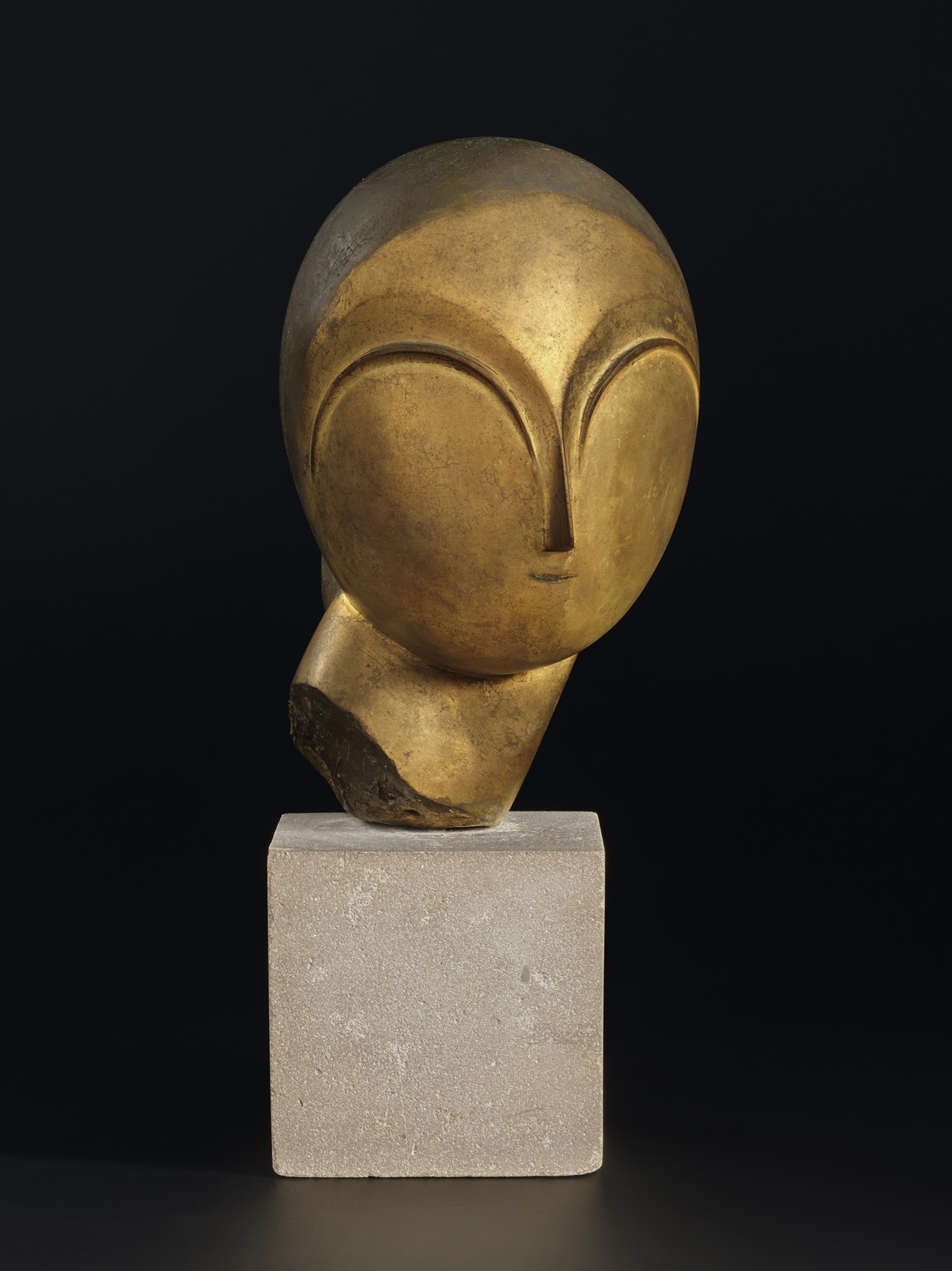
Professor Friedrich Teja Bach examines Constantin Brancusi’s seminal work, from its mythological beginnings to its magnificent, gilded realization, which changed the trajectory of sculpture forever. Brancusi’s Danaïde, circa 1913, will be on show to the public as part of MASTERPIECES: The Private Collection of S.I. Newhouse
The Greek myth of the Danaïdes tells the story of the fifty daughters of King Danaos whom the king’s brother Aegyptos demanded as wives for his sons. By order of the king, the Danaïdes —with the exception of one—kill their husbands on their wedding night. As punishment, they are banished to Hades and condemned to filling jars from which the water quickly leaks out. In the fourth book of Metamorphoses, Ovid describes the Danaïdes among the “shadows of darkness,” and how they “constantly fetch water once again, which they will lose” (IV, 463 Latin).
Around 1900, this theme was taken up several times within the Symbolist movement, for instance in Camille Mauclair’s stories Les Danaïdes (1903). In the visual arts, Auguste Rodin is particularly noteworthy; Constantin Brancusi worked for him briefly in 1907 but left his studio after a few months because — as his legendary comment goes — “nothing grows under big trees” (quoted in Brancusi, exh. cat., Philadelphia Museum of Art, 1995, p. 39).
Rodin initially executed the theme of the Danaïde as a small bronze figure, presumably with the intention of incorporating it into Les portes d’enfer. However, the figure was not used there; instead, it was realised in marble a few years later (La Danaïde, circa 1889). The rear view shows the figure slumped beside a large jug from which water flows, its stream merging with the waves of her hair. The pedestal is not a neutral form, but an element essential to the figure’s formal design and expressive quality. The sculpture presents a sequence of views that demand an active approach. As one walks around the Danaïde, she seems to want to rise again and again from the mass of the pedestal in the tension of her back, only to sink back into it once more.
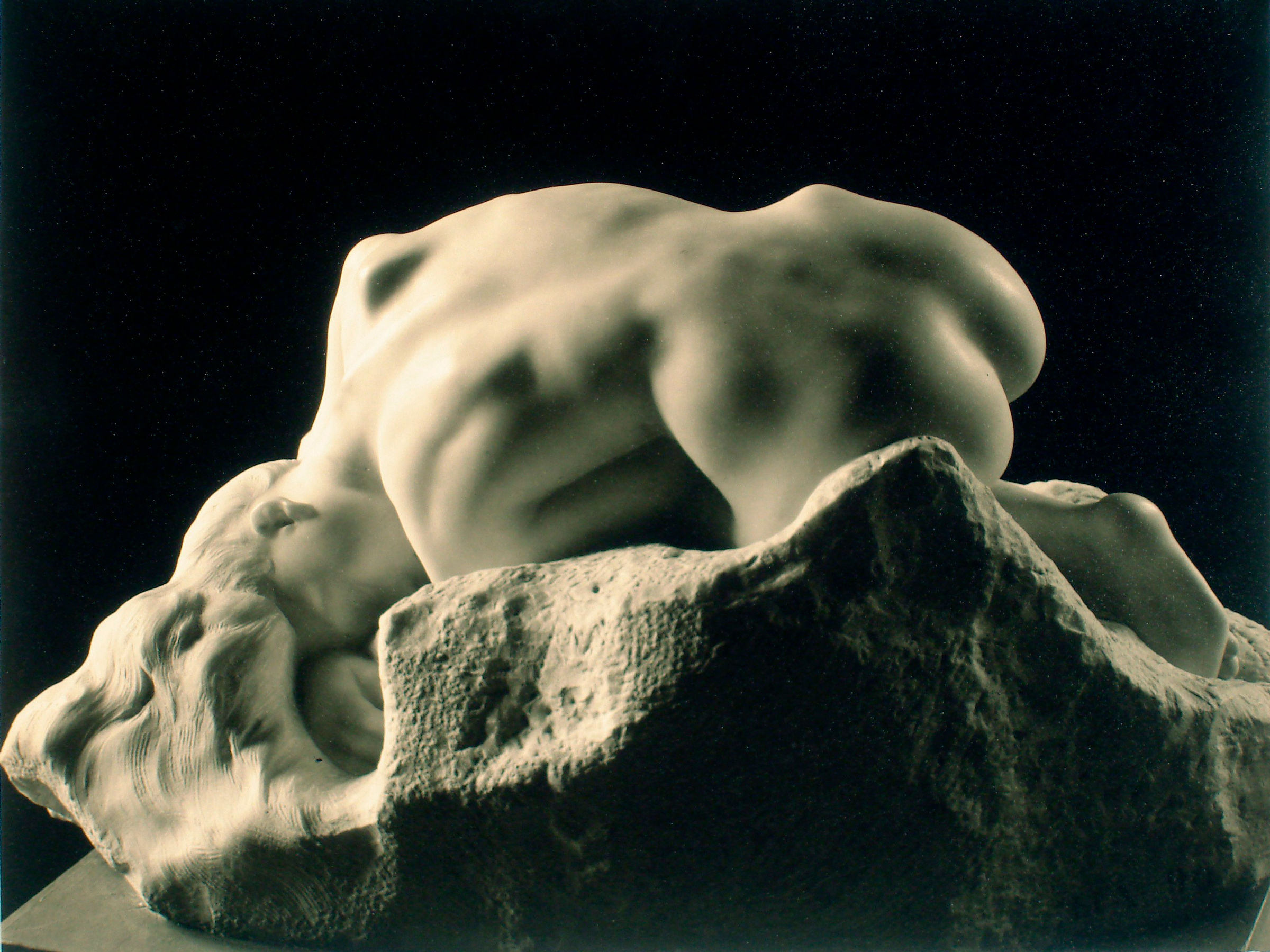
The non-finito is a figurative representation of the cyclical nature of the action implied in the narrative. Rodin remains committed to a literary understanding in his conception of the work. On the one hand, he translates the Danaïde’s exhaustion into a motif: the image of a reclining woman with a leaking water jug as an attribute. On the other hand, he transposes this flowing out onto the level of the viewer into a temporal sequence of rising up and sinking back that unfolds around the sculpture. Finally, he translates it to a material level: by representing the figure’s boundedness to the stone not solely in the fluid transition between spilled water and falling hair, but fundamentally through the use of the non-finito.
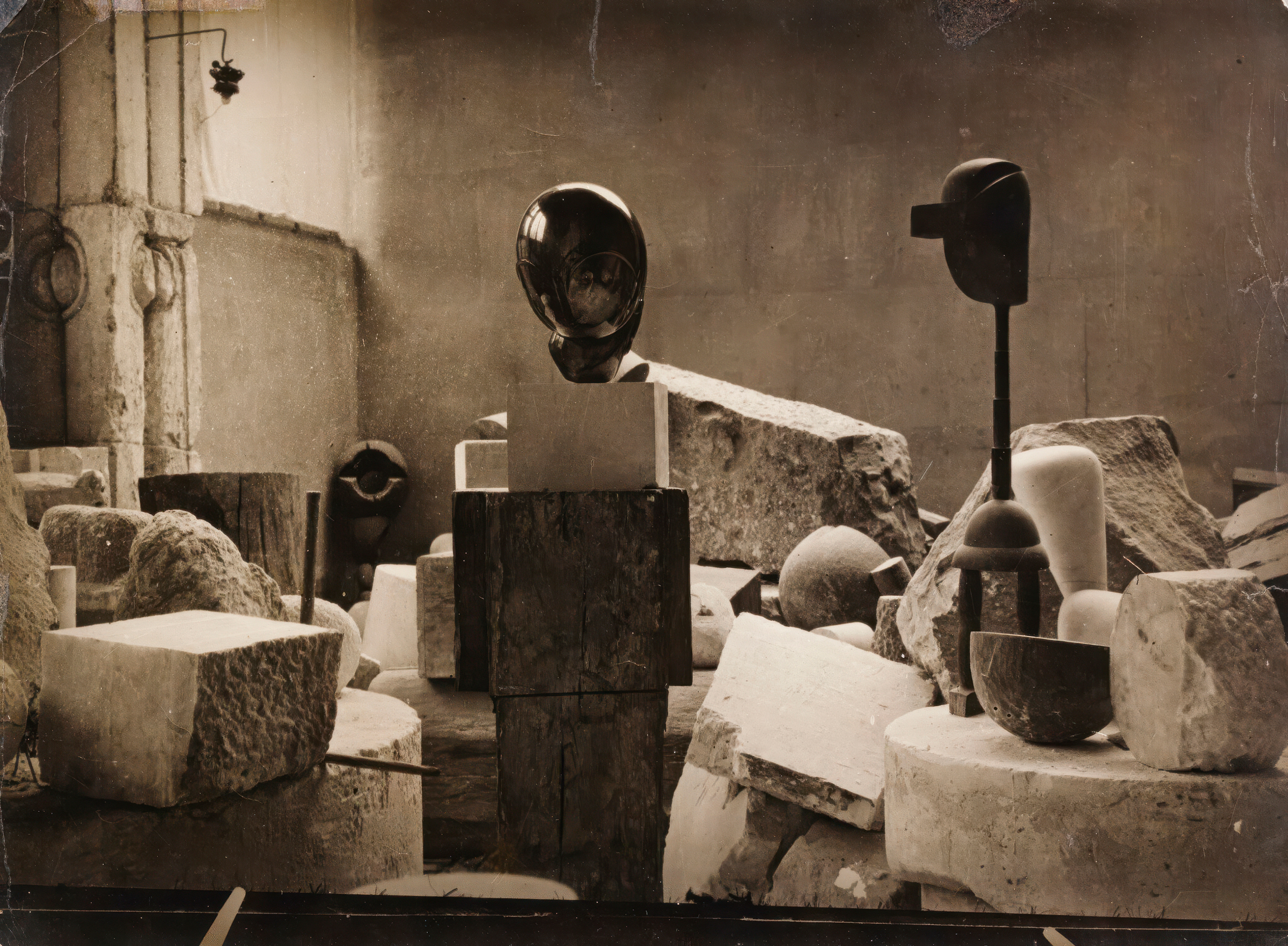
Brancusi’s early academic works culminated in 1907 with pieces such as Le Supplice and La Prière, in which the artist increasingly reduced the corporeality of the figure and simplified it to its most basic forms. In the same year, Brancusi also began working in stone. Initially still clearly influenced by Rodin’s non-finito and fragmentation, these works reveal an ever-increasing reduction of individual details and a simplification of the formal language. In this search for formal conciseness, the influence of artists such as Medardo Rosso, André Derain, and Elie Nadelman may have played a role, as did the elegance of Art Nouveau, which aimed at “essence.”
Brancusi’s exploration of the Danaïde theme began with the Danaïde (1907–1909) at the Muzeul Național de Artă al României in Bucharest. While deliberate asymmetries and the irregular curve of the forehead emphasize the individuality of this head, its tilt and the eyes without a gaze lend it a contemplative expression. The porous, sedimentary quality of the sandstone contributes significantly to its appeal, in which the memory of the Danaïde element of water takes on a material quality.
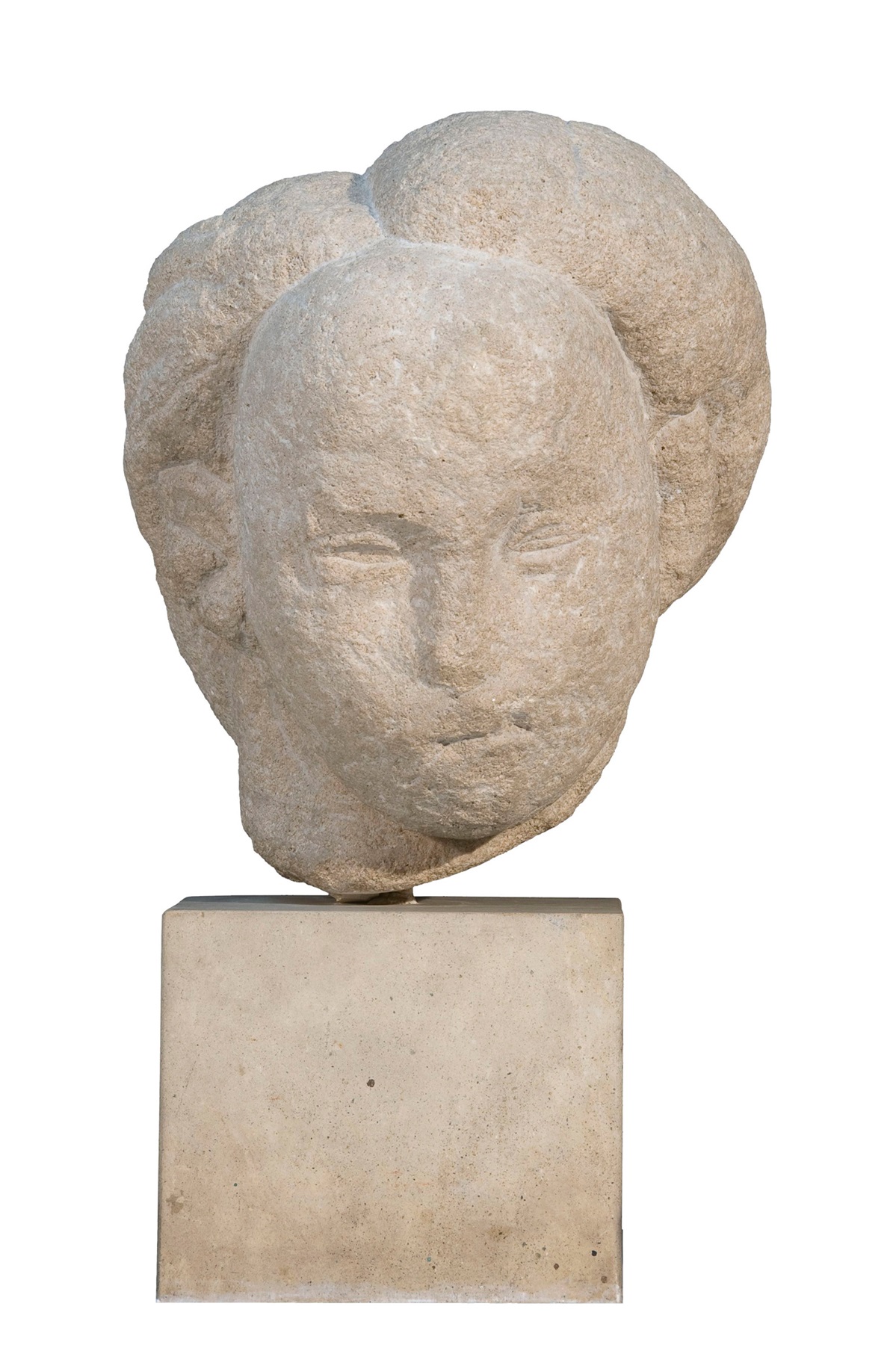
In the years that followed, Brancusi continued to explore this theme. A key inspiration was his encounter with the young Hungarian painter Margit Pogany, whom he met in Paris in 1910 and whose appearance—with her large eyes and dark, close-fitting hair gathered in a knot at the back of her head—made a lasting impression on him (Pogany’s recollection in S. Geist, Brancusi: A Study of the Sculpture, New York, 1968, pp. 190–192). The artistic result of this encounter was the marble bust Mlle. Pogany I (1912–1913) and a marble Danaïde (1913, revised 1922), which essentially represents a version of Mlle. Pogany reduced from shoulder line, arms, and eyes. A plaster cast made from this marble Danaïde served as the starting point for the bronze versions of the sculpture which Brancusi began to create in 1913.